

The Tale of Berserkir Hjarta
Gather close, my friends, and let me tell you a tale
a tale of warriors whose deeds echo across fjords and forests, from the icy shores of the north to the golden palaces of Byzantium.
Listen well, for this is the story of Berserkir Hjarta, the Heart of the Berserkers, the blade that carved its mark upon the 10th century and beyond.
The Journey of Jacky the Surgeon
In the Land of the rus, Where the rivers coil like serpents and the forests whisper secrets older than men, there was a warrior unlike most.
His name was Jacky the Surgeon, and though he carried no healer’s tools, his hands were as precise as any physician’s—except his patients never left his care alive.
As a child in Gnezdovo, he lived among warriors, traders, and the ever-present hum of danger. The settlement was a gateway between worlds, where the longships of the Northmen met the horsemen of the steppes, where Slavic chieftains and Varangian mercenaries drank from the same horns, their peace held together by nothing more than silver and steel.
Jacky’s father was a trader, a man who dealt in iron and weapons, supplying the ever-hungry warbands of the Rus and beyond.
But coin, no matter how well-guarded, draws the greedy and the desperate.
One night, raiders came, not an army, not even a warband, just a handful of men willing to kill for silver.
They left Jacky’s home in flames and his father bleeding out on the cold earth.
Jacky survived.
He was young, but not weak.
He did not weep, nor did he seek refuge with the priests who preached of fate and the gods’ will.
Instead, he sought the only thing that mattered in Gnezdovo, strength.
He trained in the yards of the Varangian warriors, learning to wield a sword before he could grow a beard.
He watched the duels between men who had served in Miklagard, studied how they moved, how they killed.
While other boys dreamed of raiding and riches, Jacky honed his skill like a blacksmith tempers a blade.
His strikes were clean, his movements efficient.
He learned that war was not about rage, nor about honor—it was about precision.
When he came of age, he did not wait for a call to arms.
He found his own war.


The jarl who ruled Gnezdovo was a man feared by his enemies and respected by his warriors.
He saw in Jacky something more than another sword-for-hire.
He saw a killer who did not waste breath on boasts or prayers.
A warrior who did not fight for bloodlust, but for perfection.
Jacky was tested in raids along the river, where the jarl’s men clashed with rival warbands and Slavic lords.
He proved himself not by brute force, but by his mind
his ability to strike where it mattered, to cut down leaders rather than slaughter nameless warriors.
In time, he was no longer just another warrior in the jarl’s service.
He became his sword-arm, the blade that struck where the jarl pointed, the weapon wielded with ruthless precision.
It was the jarl who first called him “Surgeon.”
"Because," he said, "you do not hack like a butcher, nor do you strike in anger.
You cut away what must be cut.
You make men bleed like a leech draws sickness from the body.
And when you are done, the battlefield is clean."
For years, Jacky fought as the jarl’s most trusted killer, earning his place among warriors twice his size and thrice his age.
His name became known not for wild fury, but for the certainty of death that followed wherever he set his blade.
But war, like fate, is cruel.
And loyalty, like steel, can break.
Jacky would learn this lesson in blood.
One bitter winter, the jarl led his warriors against a rival lord.
The river Dnieper was half-frozen, and the enemy stood on the far shore.
Jacky and his shield-brothers crossed in the dead of night, ready to strike at dawn.
But dawn never came for them.
Someone had betrayed them.
Instead of an ambush, they found themselves surrounded, outnumbered, outmatched.
The jarl’s most trusted men, men who had stood by Jacky in a hundred battles, were cut down around him.
Jacky himself took a wound to his side, a deep gash that would have killed a lesser man.
But he fought on.
When he realized the battle was lost, he did what no warrior wanted to do.
He turned and ran.
Not out of fear.
Not out of cowardice.
But because the truth had burned into his mind like a brand
loyalty meant nothing when men sought only power.
Someone had sold them out, and Jacky did not intend to die for the ambitions of weak men.
By the time he reached Gnezdovo, his home was no longer his own.
His jarl was dead.
His brothers were gone.
And the man who had betrayed them sat in his place, drinking his mead, surrounded by mercenaries.
Jacky could have fought him then, but he knew it was folly.
A dead man could claim no vengeance.
So he left.
Jacky’s wound healed, but his heart did not.
He wandered east, then west, then south, always seeking something he could not name.
He drank in the halls of the Rus, fought as a sword-for-hire along the Dnieper, and even traveled to Miklagard, the great city of Constantinople, where the Varangians guarded the emperor himself.
But wherever he went, he saw the same thing,
warriors who fought for gold alone, men who would sell their own kin for a heavier purse.
He saw fighters who had skill, but no code. No honor. No fire in their hearts.
And so he made a choice.
If the warriors he sought did not exist, he would find them.
He would gather them himself.
Not men who fought for a lord’s favor.
Not men who bent the knee to a king or sold their swords for coin alone.
But warriors who fought because it was who they were.
Fighters who did not need orders to know their purpose.
Men who lived for battle, but not for slaughter.
A brotherhood.
And so Jacky set out, following the rivers west, toward the lands of the Franks and Saxons, where warriors of all kinds gathered.
He no longer searched for a lord to serve
he searched for those who would stand beside him, equal in skill and fury.

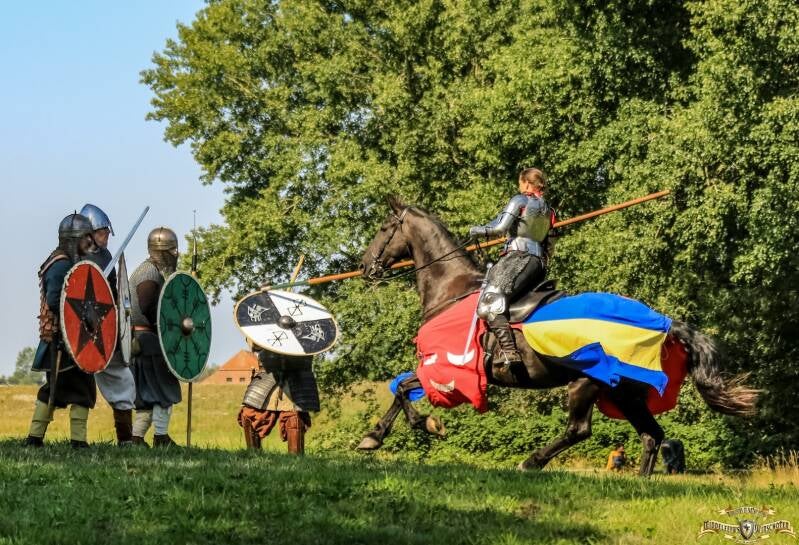


Jacky and the Bull
His journey led him to Belgica, where the mist clung to the forests and the bogs whispered forgotten names.
It was here, on a narrow wooden bridge spanning a river swollen with spring melt, that he met Robin the Bull.
Jacky had been crossing alone, his mind set on the road ahead, when a voice called out from the fog.
“You walk like a man with purpose.”
Jacky halted.
From the other side of the bridge, a figure emerged.
Robin was no towering beast, no hulking brute.
He was a man of quick feet and sharp eyes, his frame lean but strong.
his stance, low, balanced, ready, told Jacky more than words ever could.
This was not some common brigand looking for a toll.
This was a warrior testing the steel of another.
Jacky exhaled, already understanding the game being played.
“And you stand like a man waiting for a challenge,” he replied.
Robin grinned. “That depends on what you offer.”
He shifted slightly, the bridge creaking beneath his boots.
“They call you the Surgeon.
They say your blade cuts like a healer’s hand, swift, clean, without waste.”
He tilted his head. “But I prefer to see a man fight with my own eyes.”
Jacky smirked. “And if I refuse?”
Robin shrugged. “Then you turn back, and I call you a coward.”
Jacky had fought many men.
Some for silver, some for honor, some simply because fate demanded it.
But Robin was something else.
There was no hatred in his voice, no arrogance in his stance, just curiosity.
That was something Jacky could respect.
He drew his blade.
Robin moved first, quick as a wolf, closing the distance in an instant.
Jacky barely had time to block as the Bull struck, fast, relentless, precise.
There was no wasted movement, no wild swings.
Every step had a purpose.
Jacky grinned. Finally, a real fight.
Steel met steel as they moved across the narrow bridge, their feet shifting to keep balance above the roaring river.
Robin struck hard, but Jacky met him at every turn, deflecting, redirecting, waiting for an opening.
Precision against speed.
Calculation against instinct.
Then Jacky found it.
A fraction of a second, Robin’s weight too far forward, his stance just slightly off.
Jacky twisted, letting the Bull’s momentum carry him forward, then swept his foot behind Robin’s ankle.
The moment passed in a breath—Robin stumbling, Jacky’s blade at his throat.
Silence.
The mist curled around them. The river raged below.
Then, Robin laughed.
A sharp, genuine laugh, not of defeat, but understanding.
He looked up at Jacky, grinning. “So, the stories are true.”
Jacky stepped back, lowering his sword.
“You fight well.”
Robin pushed himself up, rubbing his neck.
“And you fight like a man worth following.”
He dusted himself off, giving Jacky a knowing look.
“I don’t fight for coin.
I fight to test myself, to stand beside warriors who make me better.”
Jacky studied him for a moment.
He had left Gnezdovo searching for men like this.
Warriors who sought battle not for greed, but for perfection.
Finally, he nodded. “Then walk with me.”
Robin grinned. “Try to keep up.”
And so, Robin the Bull joined Jacky the Surgeon, the first of many warriors who would forge the legend of Berserkir Hjarta.
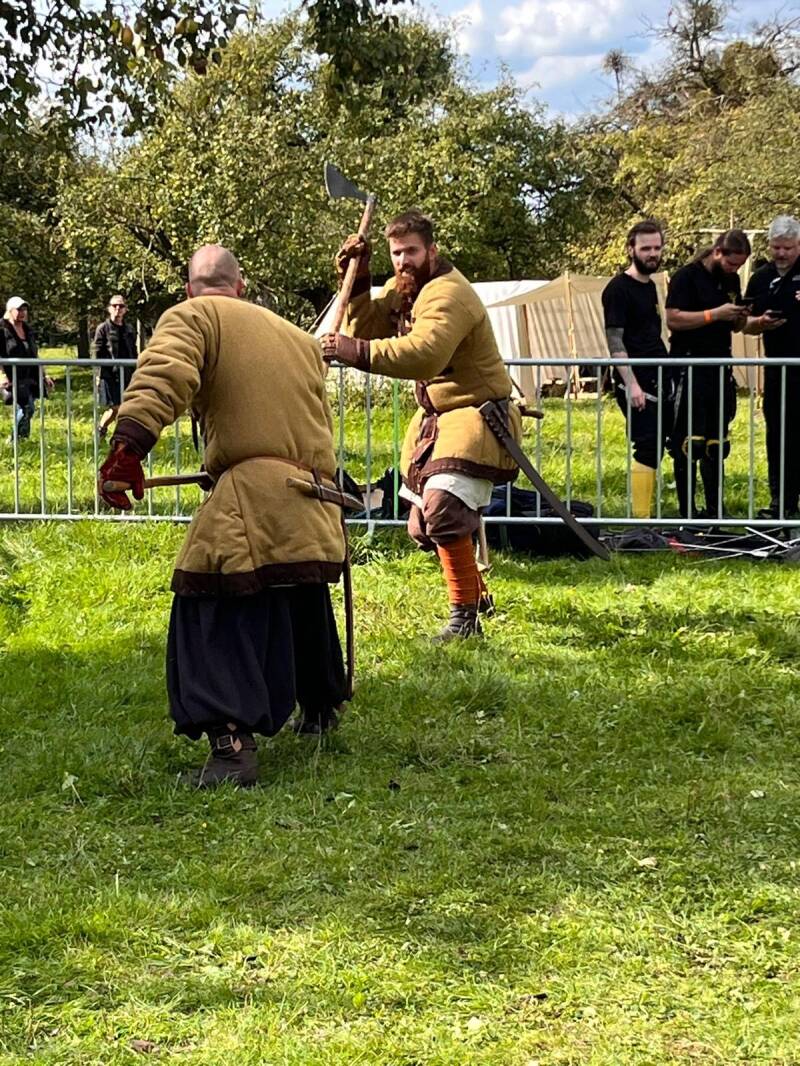


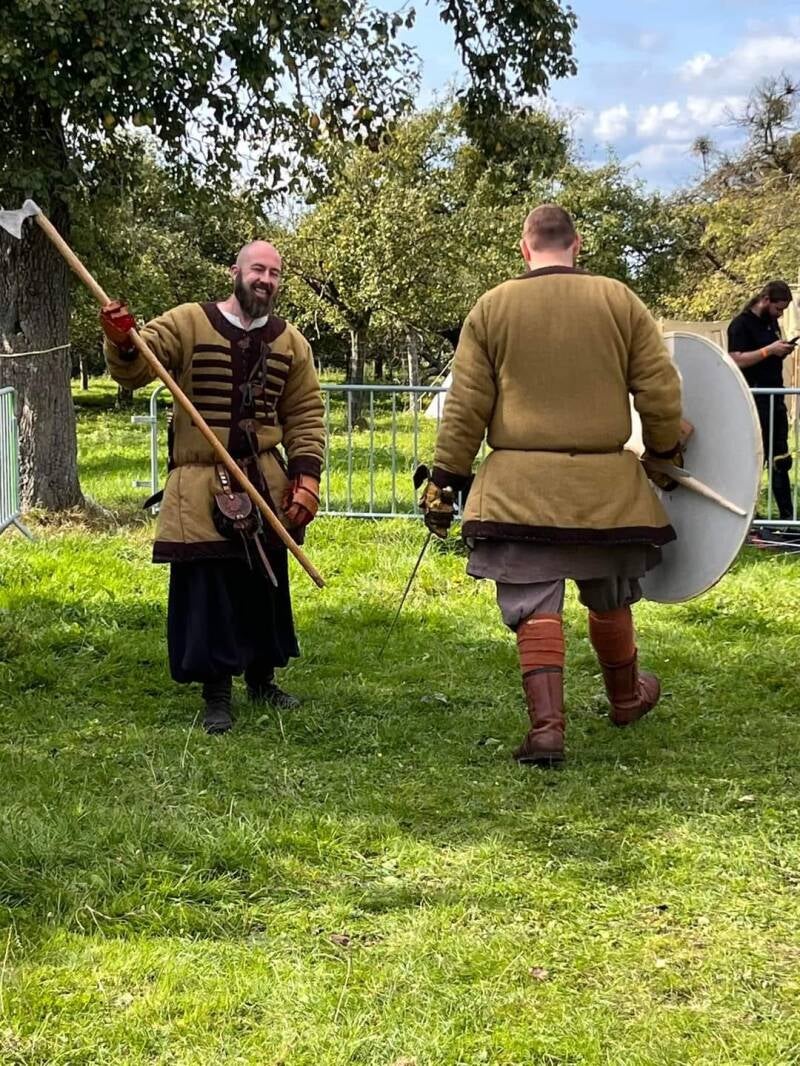
The Wild Axe of the Forest
A few days after Jacky and Robin joined forces, their journey led them deep into the forests, where whispers of a lone warrior had begun to spread like fire.
Merchants spoke of a man whose axe could cleave a tree in a single stroke, a beast of a fighter who struck like thunder and vanished into the shadows before his enemies even knew he was there.
They followed the rumors, the broken remains of bandit camps marking their path, until the sun hung low in the sky, bleeding its last light through the trees.
That was when he found them.
From the undergrowth came the soft crunch of footsteps, too light for a man his size, too deliberate for a mere traveler.
Then, out of the dimming light, he emerged.
His axe, massive, chipped, and well-worn, rested casually over his shoulder as if it weighed nothing.
His head was bare, the skin weathered by sun and battle, but his beard was meticulously kept
a stark contrast to the wildness in his eyes.
Those eyes, sharp as a wolf’s, burned with untamed fire, scanning them with the keen instinct of a predator, weighing their worth in silence.
“Who steps into my forest?” his voice rumbled, low and warning.
Jacky barely had time to respond before Robin snorted, stepping forward with a smirk.
“Your forest? Looks like any other pile of trees to me.”
The wild man narrowed his gaze.
“Strangers,” he muttered.
“Not merchants, not bandits… but you walk through my forest like you belong here.”
His eyes settled on Robin.
“You move like a man who fights.”
Then, shifting to Jacky, he narrowed his stare.
“And you… you speak like one who commands.”
Jacky met his gaze without hesitation.
“Jacky the Surgeon,”
he said evenly.
“This is Robin.
We’re not here for trouble; we’re looking for warriors.”
He tilted his head slightly.
“And by the look of things, we’ve found one. You must be Dimi the Axe.”
Dimi tilted his head, his grip tightening on his weapon. “And if I am?”
Jacky’s smirk was as sharp as his blade.
“Then I’d say the stories don’t do you justice.”
He stepped closer, his voice even but firm.
“We’re building something, a band of warriors who serve no king, no lord.
Fighters who live for glory, brotherhood, and the thrill of battle.”
He let the words settle before adding, “That sound like something you’d be interested in, Axe?”
For a long moment, Dimi said nothing.
His eyes flicked between them, weighing the truth of their words, the strength in their stance. Then, slowly, his grip eased.
“I’ve spent too long fighting alone,” he muttered, rolling his shoulders.
His gaze locked onto Jacky’s, fire still burning behind his wolf-like stare.
“Show me this brotherhood of yours, Surgeon.”
He hefted his axe, resting it against his shoulder once more.
And so, in the quiet forests outside AS, Belgica, the three warriors first joined forces.
And so, the Heart of the Berserkers; Berserkir Hjarta was born in the fields and forests of AS, Belgium.
Three warriors, each as different as the gods they followed, united by the call of something greater.
The town of AS would never forget the night the three legends forged their bond, and neither would the world.
For from that small corner of Belgica, their saga began, a tale of blood, steel, and unbreakable brotherhood that would echo through the ages.

The Spear and the axe
Long before the name Berserkir Hjarta was carved into shield rims and sung across blood-slick fields, there was Natacha, a girl with a spear, quiet as frost and twice as deadly.
And there was a man with an axe.
When their paths crossed, the gods paused… and smiled..
She was no warrior, not at first glance.
A slip of a thing, shoulders narrow, eyes quiet as winter lakes. A hunter’s daughter, they called her.
Nimble feet, sharp with snares and rabbit kills.
But when raiders came howling from the fjords, when her father was found with his throat carved like a split fish, she did not cry, and she did not run.
She found his boar spear, longer than she was tall, and she waited.
The first brute through her door was a mountain with breath like rot and eyes too full of blood.
She let him come close, close enough to smell the mead on his beard.
And then she planted her feet, just like her father taught, and drove that spear through him so deep it split his spine and kissed the wall behind.
They found his corpse days later, still skewered like game. And they stopped calling her a girl.
Word of her moved faster than crows.
Some called her ghost, some called her witch. Some mocked her still, until they crossed her path.
Then they didn’t call her anything at all.
Now Dimi the Axe, that Dimi, wild as a winter bear and twice as hard to kill, he first heard the name when the snows began to melt and the rivers broke their chains.
It was an old ferryman on the Maas who told it, voice cracked from too many winters and too little mead.
He spoke of a girl who drove a boar spear through a man big enough to break a cart in two.
Said the man screamed once, then no more, just gurgled on blood and pride.
Dimi laughed then, thought it a fireside tale, good for ale and not much more.
But then came the trader from Skjalfheim, who’d lost two guards on the road to a lone woman in furs.
Said she stepped from the trees like a shadow with teeth, laid them down quick, took nothing but their boots. “She moved like a ghost,” he said, hands shaking. “But when she struck, it was thunder.”
And still Dimi scoffed.
Then Jacky heard a tale from a dying man in a healer’s tent, his belly split wide, too far gone for sewing.
The man whispered of a spear-dancer in the low woods.
She came for his captain, not for coin, not for revenge.
Just… justice.
“She didn’t shout,” the man rasped, “just looked at him… like she already knew he was dead.”
By the time they reached the edge of the forest near As, her name came on every tongue,never loud, always low.
Soldiers spoke of her in mutters.
Bandits prayed they wouldn’t see her in the mist.
Even a wandering volva muttered her name to the wind, drawing runes in the dirt and saying, “She is touched.
Not cursed, not blessed, claimed.”
Now Dimi the Axe, broad as a barn door and twice as stubborn, he grunted when her name came up.
“She’s just a girl,” he said, stomping through the pine-thick woods near As.
“I’ve buried a dozen like her, braid and blade and not a lick of sense between.”
But Robin? had heard a different song.
He’d been drinking in a dockside hall in Svarthaven, where the floor was sticky with ale and stories spilled faster than mead.
A one-eyed sailor, face carved with sea-wind and salt, leaned close over his cup and muttered:
“There’s a woman in the low forests.
Kills without coin, strikes like a serpent.
Took down three sellswords just for raising steel in her shadow.
Left one alive, only to tell the tale, he said.
He don’t sleep now.
Flinches at rustling leaves.”
Robin remembered that tale because the man’s hands shook when he told it, and sailors don’t scare easy.
And Jacky, he heard of her in the aftermath of a skirmish near Kaldwick.
He was elbow-deep in a wounded scout, pressing cloth to a torn belly, when the man grabbed his wrist.
“She’s not right,” the scout hissed, eyes wild.
“Not touched by fear.
I saw her take a spear to the ribs, snap it off, and keep fighting.
Her eyes don’t blink.
They burn.”
The man died soon after.
But his words stayed.
So when Dimi scoffed, Robin only chuckled, tugging his hood tighter against the wind.
“They say she left six men limping behind her last week,” he said.
“And none of them willing to speak her name.”
Jacky didn’t answer.
He just checked the edge on his bone knife and muttered something under his breath.
Not fear.
Not doubt. Just readiness.
Because the woods ahead were whispering.
And her name was on the wind.
They found her at the edge of a battlefield, not grand, not glorious.
Just three mercenaries dead in the mud, one twitching like a caught rat.
She stood over them with blood on her boots and a spear gripped in one hand like it belonged there more than her own name.
“You killed them alone?” Dimi asked, half grinning.
She said nothing.
“I’m Dimi,” he said, lowering his axe.
“Some call me the Axe.”
Her eyes flicked to his blade.
“Do you come to test yours against mine?”
Robin stepped forward, hands open.
“We’re not enemies, lass.
We’re building something.
A band.
No lords, no silver.
Just battle.
Brotherhood.
Glory earned in blood.”
She looked at them long, her gaze heavy.
Saw the dirt under their nails, the bruises behind their words, the way they stood,not tall, but true.
And she looked at Dimi, who, for the first time in many winters, was quiet.
Not because he was cowed, but because he saw her not as conquest, but comrade.
“I don’t follow,” she said.
“But I walk where I will.
If your path runs beside mine... keep up.”
Dimi laughed, scratching his beard.
“Just try not to gut me in my sleep.”
Her smile was the edge of a knife.
“Don’t give me cause.”
They were not lovers.
Not then.
They were storms, one roaring, one still.
Dimi charged like thunder.
Natacha struck like lightning.
His axe cleared the way; her spear found the heart.
Where he faltered, she stood.
Where she bled, he roared.
They made no vows.
But all who saw them knew: the axe and the spear no longer fought alone.
But the world tests all things, especially what it fears.
And many feared her.
From the cold stones of the north came a giant, iron-clad, voice like an avalanche, too proud to kneel, too stupid to see the blade waiting in silence.
At Storhavn, where the clans meet beneath the standing stones, he roared: “She hides behind her husband’s axe!
Let her face me!
Let her prove she is not smoke and shadow!”
Dimi stood, fire in his jaw, but she laid a hand on his wrist.
“I’ll fight him,” she said.
“I’ll bring my spear. If he wants truth, I’ll give it to him, sharp end first.”
So the holmgang was drawn.
Earth packed, crowd tight.
The giant stepped in, greatsword in hand, armor groaning like an old gate.
She walked in barefoot.
No fanfare.
Just that same old spear.
He charged.
Like an ox.
Swinging steel like he meant to cleave the world.
She wasn’t there.
She moved, under, past, around.
The straps of his shoulder guard fell first.
Then a slice to the thigh.
Then his helmet spun into the dust.
She didn’t stop.
A flame in motion.
And when he bellowed, “Fight fair, woman!” she only said, “You asked for my best.
Now you bleed for it.”
Her final strike found the weakness under his ribs.
He dropped, not roaring, but shuddering.
And then, he wept.
Not from pain. No. From shame.
And if that were the end, it would be enough.
But shame lingers.
He returned, days later, wounds still purple, pride still leaking. “She dances with her spear!” he cried.
“Let her fight me with a blade.
A real weapon.
Sax to sword.
No tricks.”
Natacha stepped forward, eyes calm.
“You want me to use less,” she said.
“That’s your mistake.
But I’ll oblige.”
The ring was drawn once more.
He came like a storm, heavy and wild.
She moved like purpose, sharp and certain.
Steel flashed, his wrist split open.
Another step, his knee buckled, bleeding.
He never touched her.
The sax in her hand moved like thought, like memory, like death.
Finally, she closed, grabbed his wrist, and cracked the pommel into his nose.
He fell.
Didn’t rise.
Didn’t speak.
Just nodded.
And no one laughed again.
That night, the fire burned low.
Dimi sat near it, his axe across his lap, staring into the glow.
Someone, bold with drink, asked him, “What’s it like, living beside a woman like that?”
Dimi didn’t smile.
“She’s small,” he said.
“But she’s a storm.
You don’t outrun her. You don’t reason with her.
You just pray she’s facing your enemies.”
Then he looked up, and the ghost of a smile touched his beard.
“And I married the storm.”
There was laughter.
But not loud. Never loud.
Because those who heard the tale knew the truth.
You stand beside the Fierce Spear... or you fall before her.
There are no other choices.
rs broke their chains.
It was an old ferryman on the Maas who told it, voice cracked from too many winters and too little mead.
He spoke of a girl who drove a boar spear through a man big enough to break a cart in two.
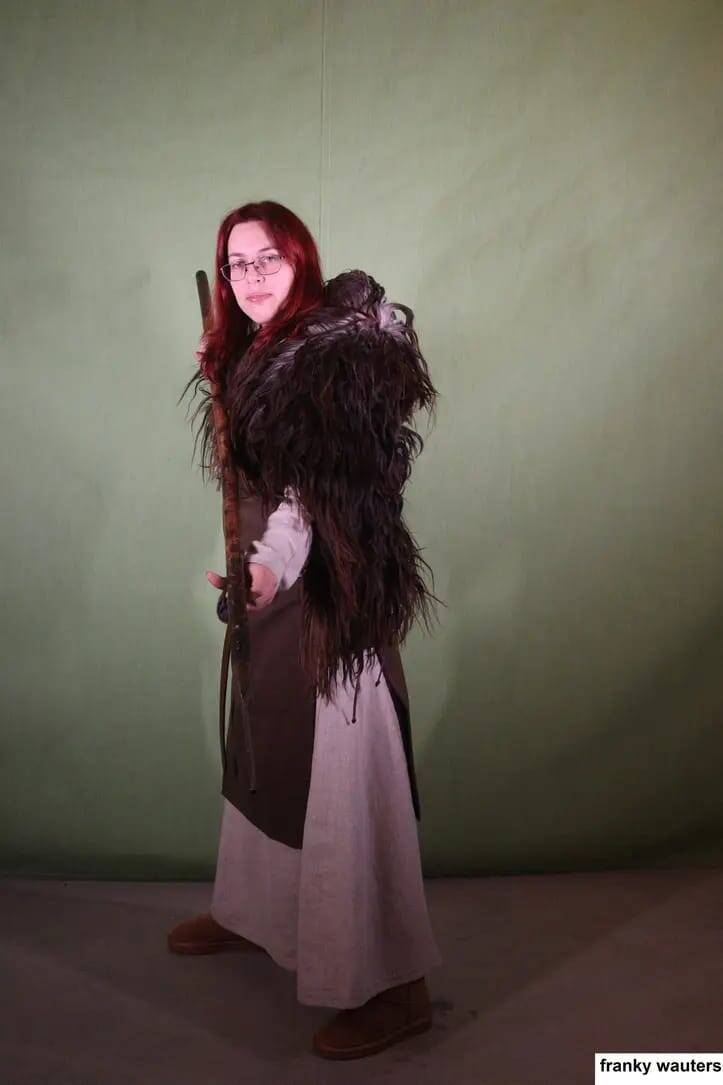


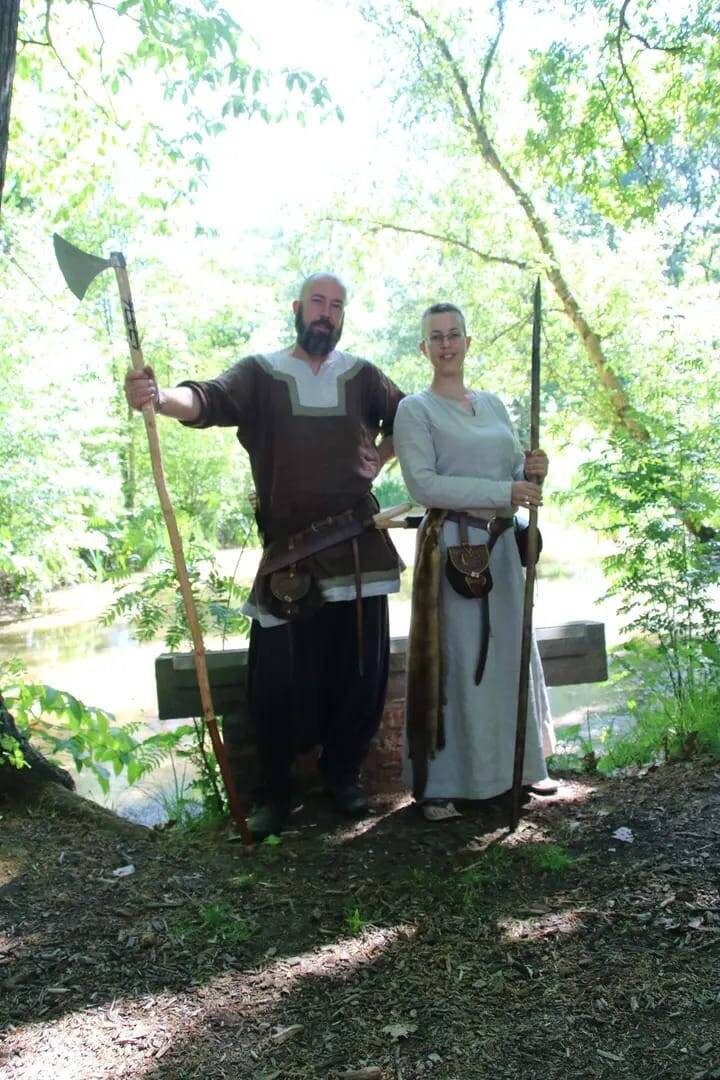

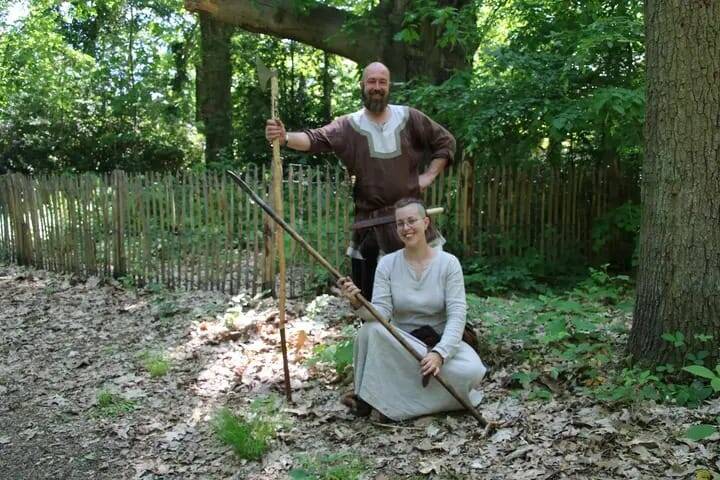


Ruben of Novgorod
People only ever ask about the axe.
About the name, The Butcher.
They never ask who I was before that.
So let me tell you.
I was born near the shipyards of Novgorod, close to where the Volkhov meets the lake.
Not the docks themselves, too crowded, but just above them, in a row of timber sheds and smokehouses where my parents built boats.
Not warships.
Not showpieces.
Working boats.
For fishers, traders, ferrymen.
They made things meant to float and last, not impress some Jarl with too much silver.
My father shaped hulls and ribs.
His hands were like driftwood, knotted, split, and steady.
My mother stitched sails and tied rope strong enough to hold a storm.
They didn’t talk much. They worked.
And I did too, as soon as I could hold a hammer.
I helped shave planks, soak pitch, hoist frames.
I learned the rhythm of work, the knock of the mallet, the hiss of hot iron in water.
But more than that, I listened.
Because our shipyard was a crossing point.
People passed through from everywhere, Rus merchants, Norse raiders, Swedes, Finns, even madmen from the east.
And while their hulls were patched or built, they talked.
Told stories.
To pass the time.
To forget things.
To remember them.
And I listened to all of it.
I didn’t write.
I didn’t sing.
I just remembered.
Every broken oath.
Every lost brother.
Every storm survived.
I stored them away like iron nails in a jar.
That’s also where I met her: Anya.
She wasn’t from Novgorod.
She was a cousin of one of the sailmakers, passing through with her brother.
She had dark hair, fast hands, and a way of looking at you like you already said something foolish.
She caught me staring.
Called me “splinter-boy.”
I told her I was more dangerous than I looked.
She asked if I could build something that wouldn’t sink.
I asked if she could stay long enough to find out.
She did.
We married in spring, in a small wooden hall near the water.
She didn’t want rings.
She wanted a boat of our own, carved by both our hands.
So we built one.
Called it Vrak, after the word for “wreck.” She had a sense of humor like that.
And then came Luna.
She was fire and laughter.
Always barefoot.
Always loud.
I carved her a little axe out of leftover pine, and she ran around chasing dogs and geese, calling herself “Captain of the Shield.”
She was three winters old when she told me I’d better build her a real boat one day,
“or I’ll steal one.”
I told her I would.
That life, it was good.
Not rich. Not loud.
But ours.
I still remember the smell of wet rope.
The scrape of a plane across oak.
Anya singing to Luna while scraping bark for kindling.
And if the gods had left me that, I would’ve never needed the axe.
But that’s not how the story ends.
They say you don’t remember whole years.
Just moments.
A smell.
A sound.
The way the wind turned.
I remember the last good morning.
It was early spring.
River ice had cracked and gone.
Birds were back, loud and stupid.
Luna woke me before the sun with that crooked grin and a stick in her hand.
“Papa, it’s boat-day! You said!”
We were helping finish a knarr on the river bend.
Traders from the west had brought coin and bad jokes.
Luna loved climbing aboard and shouting orders like a war-chief.
Anya packed us goat cheese and eggs.
She was always sharp in the morning, cutting kindling, singing badly under her breath, bossing me about with her eyes.
She kissed me hard on the cheek.
“Don’t be late. We’ve got soup to make and I need your arms.”
I told her: “Il be back in time.”
That was the last time I heard her voice.
Down by the shipyard, I worked the hull while Luna played with the sailmaker’s son.
She tied rope around a dog and called it a war-horse.
I shouted at her to stop.
She shouted back that I was boring.
The last normal moment of my life was her laughing.
Then came the screams.
Not bird cries.
Human.
A rider.
Bloody, wild-eyed, yelling:
“They’re here, RAIDERS! FROM THE SOUTH! FIRE IN THE STREETS!”
I looked toward the hill.
Smoke. Black smoke.
Not hearth smoke, burning homes.
I grabbed Luna’s hand and ran.
We bolted up the slope.
The village was chaos, panicked neighbors, overturned carts, the air thick with fire and panic.
Then I saw them.
Six men in dirty mail, torches in hand, chasing a fleeing woman toward a barn.
I looked at Luna.
She was scared. Really scared.
And I made a choice.
I crouched, grabbed her shoulders.
“Run home to Mama.
Go straight through the alley.
Don’t stop. Do not wait for me.
Do you understand?”
She nodded, eyes wide.
I pressed her little axe into her hand.
The wooden one I carved.
It was already scorched from the heat in the air.
“Go, Luna.”
She ran.
And I turned to fight.
I don’t remember how many I killed.
I remember screams.
My blood. Theirs.
A pitchfork I broke over a man’s back.
Screams from someone’s grandmother.
By the time it was over, I staggered toward home, bruised, coughing ash.
The roof had already fallen in.
The walls collapsed inward.
They found Anya’s body later.
Fell defending the house, they said.
Blade in hand. No shield.
Luna’s axe was found burned, cracked, buried in the soot—but no body.
No blood trail. No bones. Nothing.
Some say she burned to ash.
Others say the raiders took her.
I don’t know what’s worse: a death I didn’t witness,
or a silence I can’t answer.
And in the end,
it’s not the screams I remember.
Not the smoke, the blood, the chaos.
It’s her hand in mine, small, trembling.
And the moment I let go.
Told her to run.
She didn’t speak.
Just nodded, brave the way children are
when they don’t yet know what fear means.
Then she looked back.
Just once.
Eyes wide, searching,
maybe for me, maybe for something safe.
Then she turned the corner,
and that was the last I saw of her.
That’s what I carry.
Not the fire. Not the ruin.
Just that look.
Just that moment.
Like a blade, buried and never pulled free.
I stayed long enough to bury Anya.
Helped lift beams. Carried buckets.
Stood beside neighbors who couldn’t meet my eye.
But something in me was already buried with her.
My heart didn’t break. It burned.
Turned black and silent, like the beams of my home.
When my hands stopped shaking, I shaped a new axe.
Not for glory. Not for war.
A one-handed thing. Simple. Brutal.
Made not to win, but to end.
I named it Svoloch, “bastard.”
Because it wasn’t blood of my blood, but it’s all I’ve raised since.
Every strike it makes is a word I no longer say.
I didn’t stay. I couldn’t.
There was no peace left in the ashes.
So I walked,
From fjord to forest, from smoke to silence,
Chasing shadows and rumors, half-mad hopes.
Whispers of raiders. Of slavers.
Of girls with grey eyes and a scar on the wrist.
I never found her.
But I found men who burned what didn’t belong to them.
And I made them pay.
Not with prayers.
With iron.
With the bite of a bastard axe.
But still,
when the battle is done,
the blood drying on the ground,
and my arms grow tired from the fight,
There is one name I speak above all.
Not Odin. Not Thor.
Not the gods of thunder or war.
They hold the halls of kings and warriors.
But I have neither crown nor feast.
Only a daughter lost to the wild and the dark,
and a bastard axe I call my own.
So I speak to Hel.
At first, I cursed her.
For the fire that took my home.
For the night that swallowed Luna’s small cries.
For the silence I could not break.
But time teaches in bitter ways.
Hel is no thief.
She is the guardian of the forgotten,
the keeper of those who walk the shadows between life and death.
I pray to Hel not for peace,
but for keeping.
For watching over what I cannot reach.
If Luna still walks this earth,
lost in forests or hidden in stranger’s homes,
I pray Hel guards her well.
That she walks far from the fire and the hunger.
That she knows safety and quiet,
and that her heart is whole.
If Luna is gone,
then I ask Hel to hold her gently.
To keep her warm beyond the cold silence of death.
So before each fight,
I kneel and whisper:
“If my daughter is with you, Hel,
keep her safe and free from pain.
Let her live in shadow and light,
untouched by the fire that burned us.
And if she is not yet yours,
then wait.
I will find her.”
Every life I take in battle,
I send to Hel not as tribute,
but as promise.
That I have not forgotten.
That I am still searching.
That one day my steps will lead me to her,
wherever she may be.
And if I find her,
alive or beyond,
then I will kneel.
Not in sorrow.
But in hope.
One night, as the moon bled red over the trees,
I found them.
The ones who razed Novgorod.
Who put fire to my roof.
Who took Anya’s breath,
and my daughter with it.
I had tracked them for weeks,
through snow-thick pine and forgotten paths,
led by whispered names, burnt symbols,
and the scent of ash and blood.
They were camped in a gully, drunk, laughing.
They had no idea the past had caught up.
I struck like a wolf in winter.
Fast. Quiet.
Until the screams started.
Steel sang its old song.
Svoloch split skulls and opened bellies.
I felt every blow in my ribs, still healing from old wounds,
but I didn’t stop.
When it was over, only three remained alive,
broken, bleeding, crawling in the mud.
I didn’t kill them. Not yet.
I dragged them to the fire and bound them with their own belts.
Tore linen from the dead to gag the screams.
Then I began the work.
The gods may look away. Hel may not.
I carved truth from their flesh.
Fingernails first. One by one.
A hot blade pressed into the soles of their feet.
Salt in open wounds.
I broke fingers backwards until they spoke.
I tore lies from their throats.
Not out of cruelty. Out of purpose.
I needed to know what they did with Luna.
And then, between sobs and shattered teeth,
one of them spoke:
“She’s alive... taken... south.
Sold to a trader.
They call him Skuggi av Frosten.
The Shadow of Frost…”
That was all I needed.
I pressed Svoloch to his throat and said nothing.
He nodded.
And I opened him from chin to chest.
Then everything went quiet.
No more screams. No more rage.
Just the wind, the fire,
and my own heart beating like a war drum
finally slowing.
I looked down at my hands,blood to the elbows.
At the carnage around me.
At the dead.
I should’ve died in that ditch.
I didn’t felt it at first but, I looked down, and didn’t only see the blood of the raiders
But they cut my side fully open,
I felt my conscious fading, when I dropped to my knees.
I bled out in silence, next to the corpses of the men who took everything from me.
I don’t know how long I lay there.
The wind froze the sweat on my skin.
The pain dulled. Then vanished.
I thought I was following her.
But fate had one more turn left.
Boots in the mud.
Voices in the cold.
I opened my eyes to figures moving among the dead.
Yellow caftans, Black and green shield and weapons notched from long use.
They weren't kingsmen, or bounty hunters.
They were Berserkir Hjarta.
A warband working under Varangian coin, chasing raiders across the coast.
They had been tracking this group for days,
and by the looks of the bodies, I’d done their job for them.
One of them stepped forward, scowling down at me..
His face looked like it had been through worse winters than I could count.
That was Jacky.
He nudged the dead raider with his boot, looked back at me, and said:
“You do all this with one axe?”
I tried to answer. But blood filled my mouth.
“Fair enough,” he said. “Get him up.”
They hauled me from the cold earth, bloodied and broken, toward their camp.
The fire flickered low beneath the grey sky, smoke curling like restless spirits into the night.
I sat among strangers, my body still aching from battle-wounds fresh, hands stained with blood that wouldn’t wash away.
The silence was heavy, broken only by the crackling flames and the occasional murmur of distant wolves.
They didn’t speak much at first.
Their eyes measured me, searching for the man behind the scars and the fury.
Not a word of welcome, no songs sung in my honor.
Just watchful stillness.
Then Jacky, tall and sharp-Tongued, broke the quiet.
He tossed me a slab of dried meat and a skin of water without a word, his gaze steady but not unkind.
Slowly, the others relaxed.
They saw how I moved, each breath, each scar, each heartbeat, was carved from the same relentless iron that forged their own souls.
A few nights passed like this.
No grand oaths. No loud declarations.
Only the slow, quiet knowing that I belonged.
One evening, after a hunt that left the ground slick with the enemy’s blood, I sat sharpening Svoloch by the dying embers.
A shadow loomed behind me.
“You fight like a man who’s already lost everything,” came a voice low and rough.
I didn’t answer.
“But you don’t stop,” he said, “and that’s why you’re ours now.”
Then, almost as a warning, and almost as a promise, they named me:
“The Butcher”
They didn’t call me that just for what I did with my hands.
Not just for the screams that echoed from that barn,
or the pieces I left behind.
It was the way I looked at them,
like I’d already weighed their souls and found them wanting.
The way I swung my axe, not in rage, but with purpose.
Cold. Clean. Inevitable.
It was the silence after,
the kind that settles in when the gods themselves turn their faces away.
They didn’t say it to mock me.
They said it because they understood.
Because sometimes, to survive, you must become the shadow that leaves no mercy.
And with that, I was no longer a stranger in there.
I was one of them.